Health
Breast Cancer Research: Where Do We Stand in 2026?
CEO of NeoPhi

On this page
Pink October: Where Does Breast Cancer Research Stand Today?
Under the direction of Charlie Grosman, CEO of NeoPhi - This article draws on 26 scientific publications from 2023 to 2026, identified with NeoPhi .
October is drawing to a close, and with it the Pink October campaign, which encourages the public, healthcare professionals and institutions to mobilise against breast cancer. Its principle is simple: to raise awareness of the disease, encourage organised screening and individual vigilance, support those affected, and raise funds to advance research. The pink ribbon, which has become its emblem, serves as a reminder that earlier detection can improve treatment options.
Beyond prevention, Pink October highlights another essential issue: breast cancer research. Understanding the biological mechanisms of tumours, identifying new markers, refining diagnosis, personalising treatments and better preventing recurrence all require long-term research. Fundamental research, clinical trials, social sciences and public health studies therefore complement one another to transform discoveries into tangible progress, improve quality of life and offer new perspectives to patients.
But where does breast cancer research stand today? To answer this question, we queried NeoPhi using the “Research Areas” framework, based on scientific publications ranked B/Q2 or above and published between 2023 and 2026.
Breast cancer is a complex and heterogeneous disease that remains a major cause of mortality among women worldwide, and conventional clinical markers are not always sufficient to personalise therapeutic decisions [Alvarez-Frutos et al., 2023]. Recent research therefore aims to better understand tumours, identify reliable biomarkers, improve diagnosis, adapt treatments and anticipate recurrence. In this context, the integration of multi-omics data (combining several levels of biological information, including the genome, gene expression, proteins and metabolites) and artificial intelligence is playing an increasingly important role [Gazzah et al., 2025].
Tumour Heterogeneity and Multi-Omics Mapping in Breast Cancer
Breast cancer presents considerable genetic, transcriptomic (related to the complete set of RNA molecules produced and therefore to gene activity) and proteomic (related to the complete set of proteins actually present and active in cells) diversity, which influences its progression and response to treatment [Neagu et al., 2023].
Multi-omics analyses distinguish subgroups with different prognoses beyond traditional classifications [Sharma et al., 2024]. They also shed light on interactions between metabolism, immunity and treatment resistance, particularly in triple-negative breast cancer, so called because tumour cells have neither oestrogen receptors nor progesterone receptors and do not overexpress the HER2 protein [Guozheng Li et al., 2026] [Juan & Peng, 2025].
Spatial and single-cell approaches are now providing a more precise understanding of the role of the tumour microenvironment.
Discovery and Validation of Breast Cancer Biomarkers
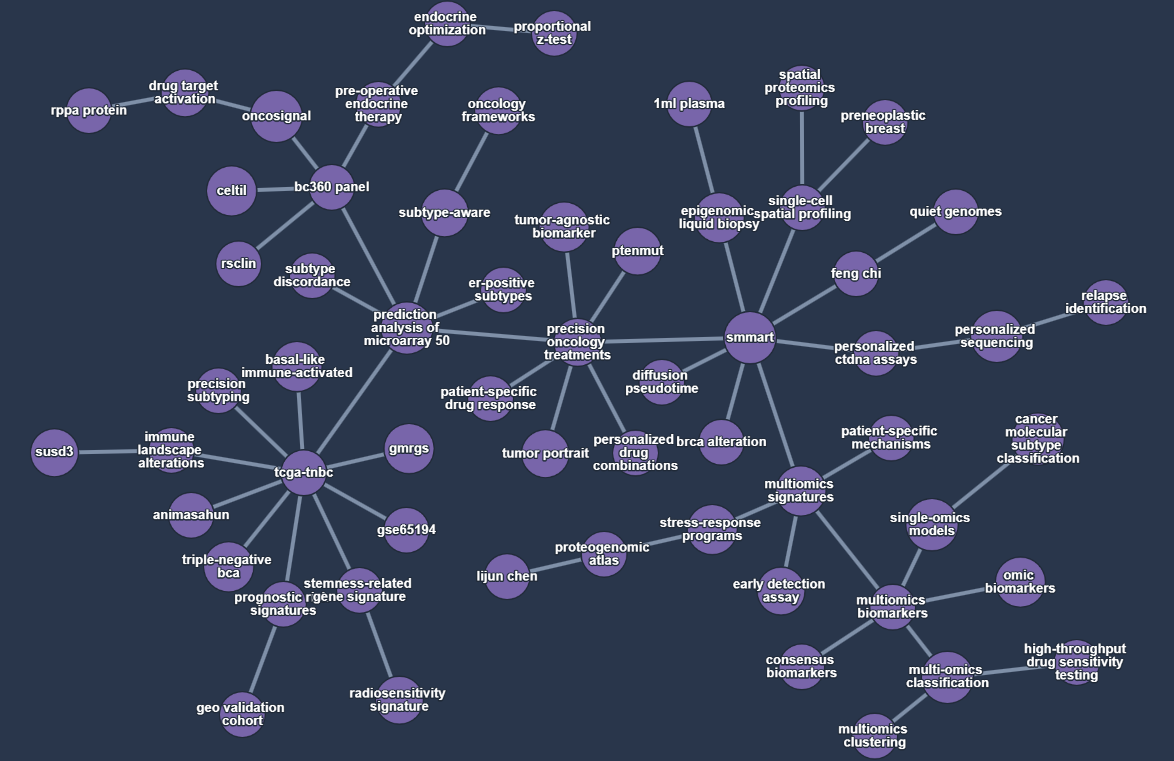
Precision oncology depends on robust biomarkers. Multi-omics analyses have identified prognostic genes, such as LMO1 and PRAME, associated with lower survival and drug resistance [Malighetti et al., 2025].
Metabolomics has also revealed alterations in glycolysis, lipid metabolism and redox balance, meaning the cellular balance between the production of oxidising species and the antioxidant mechanisms that neutralise them [Perestrelo & Silva, 2025].
Proteogenomics, which combines genomic data with protein analysis to link DNA alterations to their functional effects in cells, highlights potential targets specific to certain subtypes [E. Jaehnig et al., 2026], while circulating extracellular vesicles offer a potential non-invasive approach to detecting recurrence [Hyon et al., 2025].
Breast Cancer Diagnosis and Recurrence Risk Assessment
The integration of clinical, pathological and molecular data improves risk stratification. Signatures related to metabolism or intratumour heterogeneity can predict survival and provide information about the immune microenvironment [Shen et al., 2025] [Zhu, 2025].
Models combining plasma proteomics and metabolomics have achieved strong diagnostic performance (AUC > 0.95) [Zhang et al., 2026]. For HER2-positive breast cancers, certain molecular alterations appear to provide more information than HER2 status alone [Eunjoo Lee et al., 2026].
Finally, AI-assisted pathomics (the quantitative analysis of tissue slide images to extract microscopic characteristics that are invisible or difficult to measure with the human eye) can predict treatment response and the risk of early recurrence (AUC = 0.90) [Yue et al., 2026].
Personalised Breast Cancer Treatment and Response Prediction
Multi-omics machine learning models improve the prediction of treatment response according to tumour subtype [Yang et al., 2025]. Transcriptional monitoring of blood can also provide early information about response to immunotherapy [Xiaopeng Sun et al., 2026].
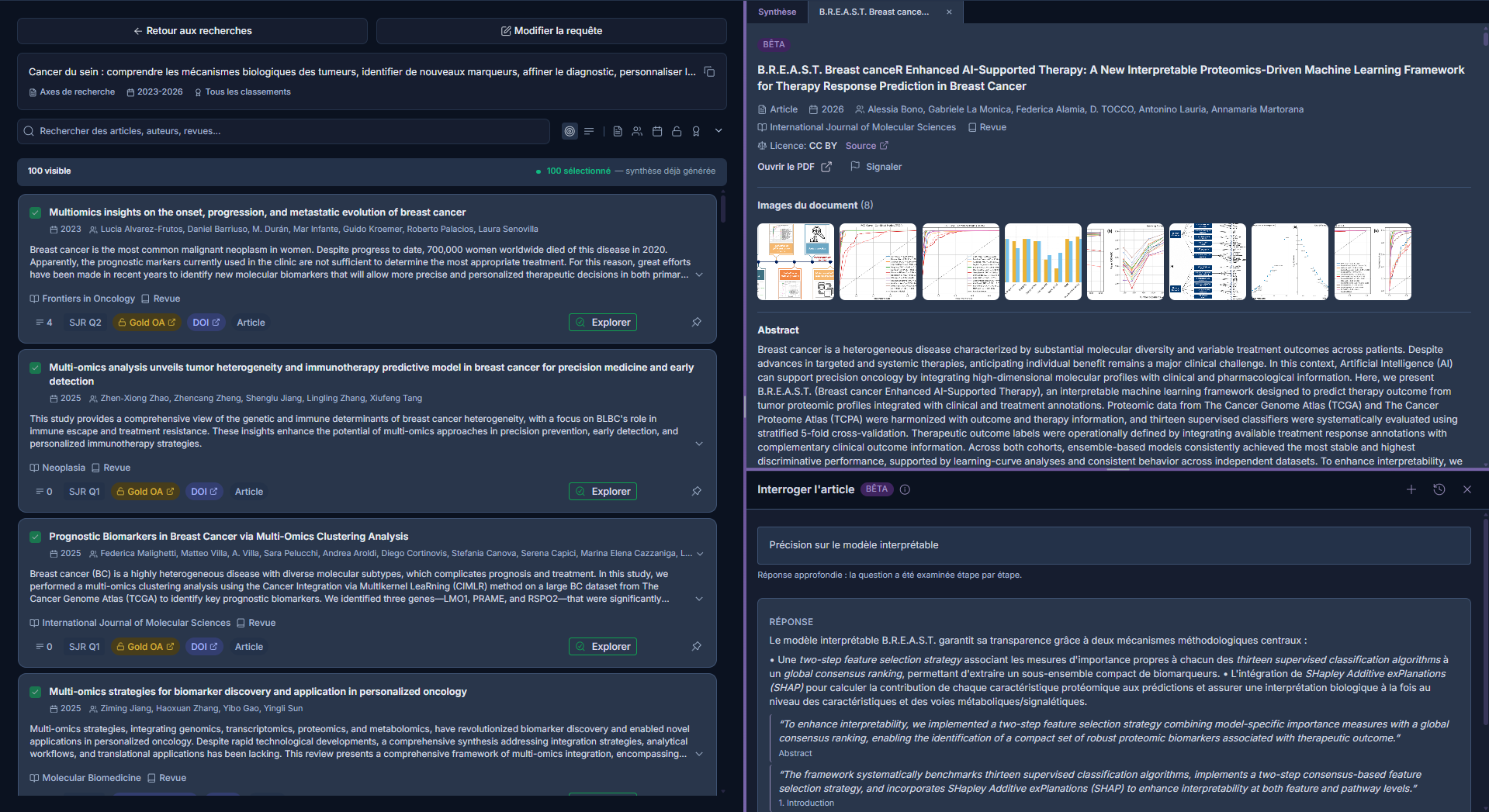
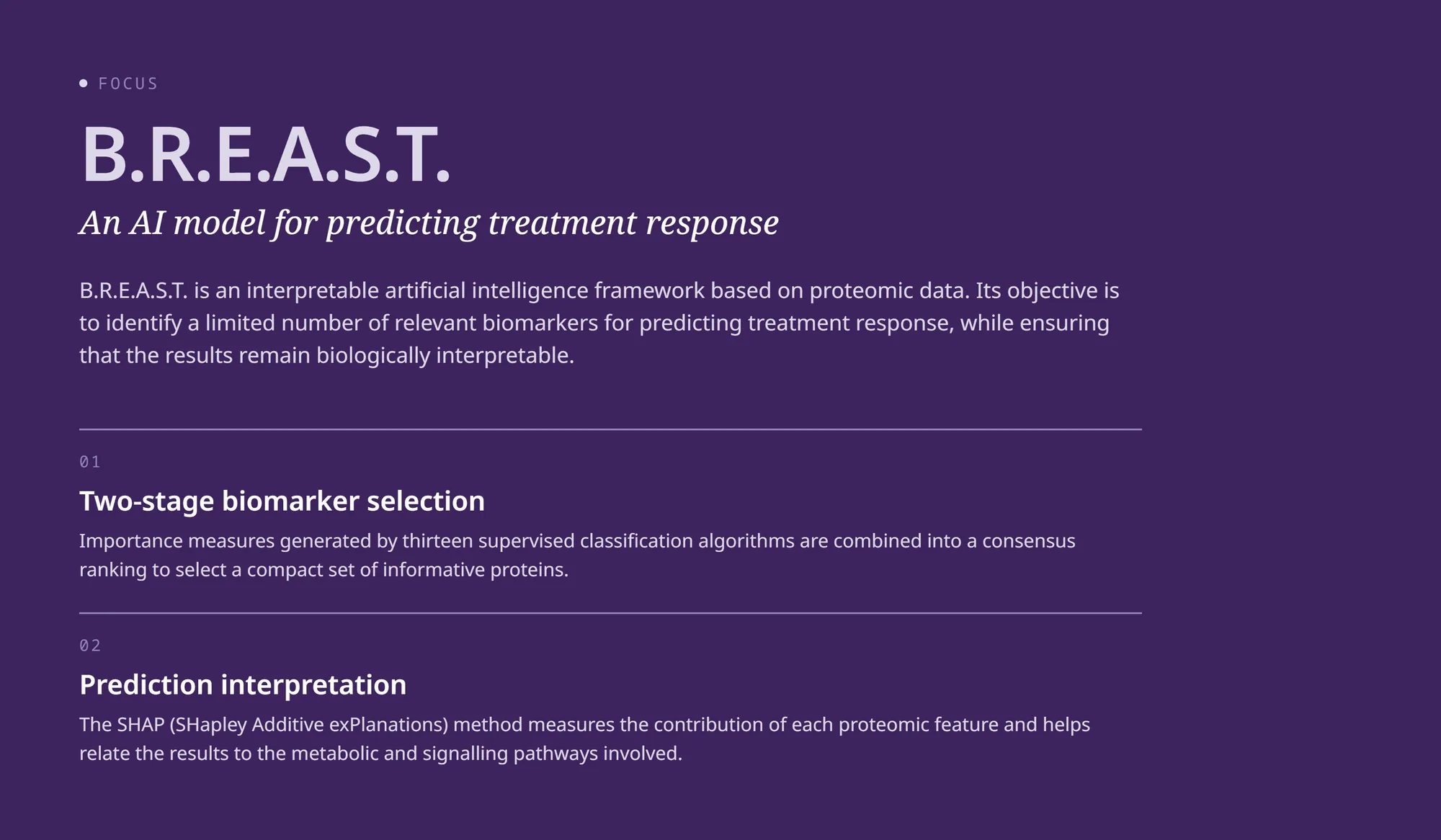
For HER2-positive tumours, molecular profiling distinguishes groups with different therapeutic sensitivities [Li et al., 2024]. Interpretable models such as B.R.E.A.S.T. (see focus below), based on proteomics, also identify signatures associated with treatment sensitivity [Alessia Bono et al., 2026].
Finally, the analysis of serial biopsies helps identify mechanisms of resistance and adapt treatment combinations [Mitri et al., 2024].
Artificial Intelligence and Breast Cancer: Challenges for Clinical Translation
Translation into clinical practice remains challenging. Data heterogeneity, batch effects and a lack of standardisation limit the reproducibility of signatures [Jiang et al., 2025] [Gazzah et al., 2025].
The complexity and limited interpretability of certain models also hinder their adoption [Sabit et al., 2026]. Biomarkers derived from liquid biopsy or spatial proteomics still need to be prospectively validated and assessed from a health economics perspective [Emad A Rakha, 2026].
Finally, differences between primary tumours and metastases require molecular reassessment throughout the course of the disease [Buchalter et al., 2026].
Conclusion: What Are the Next Priorities for Breast Cancer Research?
Recent data show that combining multi-omics approaches with artificial intelligence improves our understanding of breast cancer, biomarker discovery and the personalisation of treatment [Gazzah et al., 2025].
Current priorities include standardising methods, validating signatures in prospective studies and developing liquid biopsy approaches to monitor residual disease [Xiangxiang Cao et al., 2026].
Spatial omics, single-cell sequencing and functional models should also help researchers better understand and overcome treatment resistance [Kuasne et al., 2025]. Their integration into transparent clinical frameworks will be critical to achieving lasting improvements in survival and quality of life.
Frequently Asked Questions About Breast Cancer Research
Where does breast cancer research stand in 2026?
Recent research highlights several rapidly developing areas, including multi-omics approaches, new biomarkers, liquid biopsy and artificial intelligence models designed to improve diagnosis, risk assessment and the personalisation of treatment.
How is artificial intelligence being used in breast cancer research?
Artificial intelligence can be used to analyse complex biological data, integrate multiple types of omics data, analyse pathological images, and develop models capable of predicting treatment response or the risk of recurrence.
What is multi-omics in breast cancer research?
Multi-omics combines several levels of biological information, such as genomic, transcriptomic, proteomic and metabolomic data. This approach can provide a more comprehensive representation of a tumour and its surrounding biological environment.
What new biomarkers are being studied in breast cancer?
Recent research is exploring genetic, proteomic and metabolic signatures. Some studies are also investigating circulating extracellular vesicles as a potential source of non-invasive biomarkers for detecting breast cancer recurrence.
Can AI predict breast cancer treatment response?
Some machine learning models described in the scientific literature can predict treatment response using multi-omics, proteomic or pathological data. However, these results depend on the populations and datasets studied and require clinical validation before widespread use.
What is a liquid biopsy, and why is it being studied in breast cancer?
A liquid biopsy involves analysing biological information associated with a tumour from blood or other bodily fluids. In breast cancer research, it could contribute to disease monitoring, biomarker identification and the detection of signs of recurrence without systematically requiring a tissue biopsy.
What are the main challenges facing breast cancer research today?
Key challenges include the standardisation of data and methods, the reproducibility of molecular signatures, the interpretability of some artificial intelligence models and the prospective validation of biomarkers before they can be integrated into routine clinical practice.